Charades Time Limit: How Long Should Each Round Be?
The Timer Makes (or Breaks) the Game
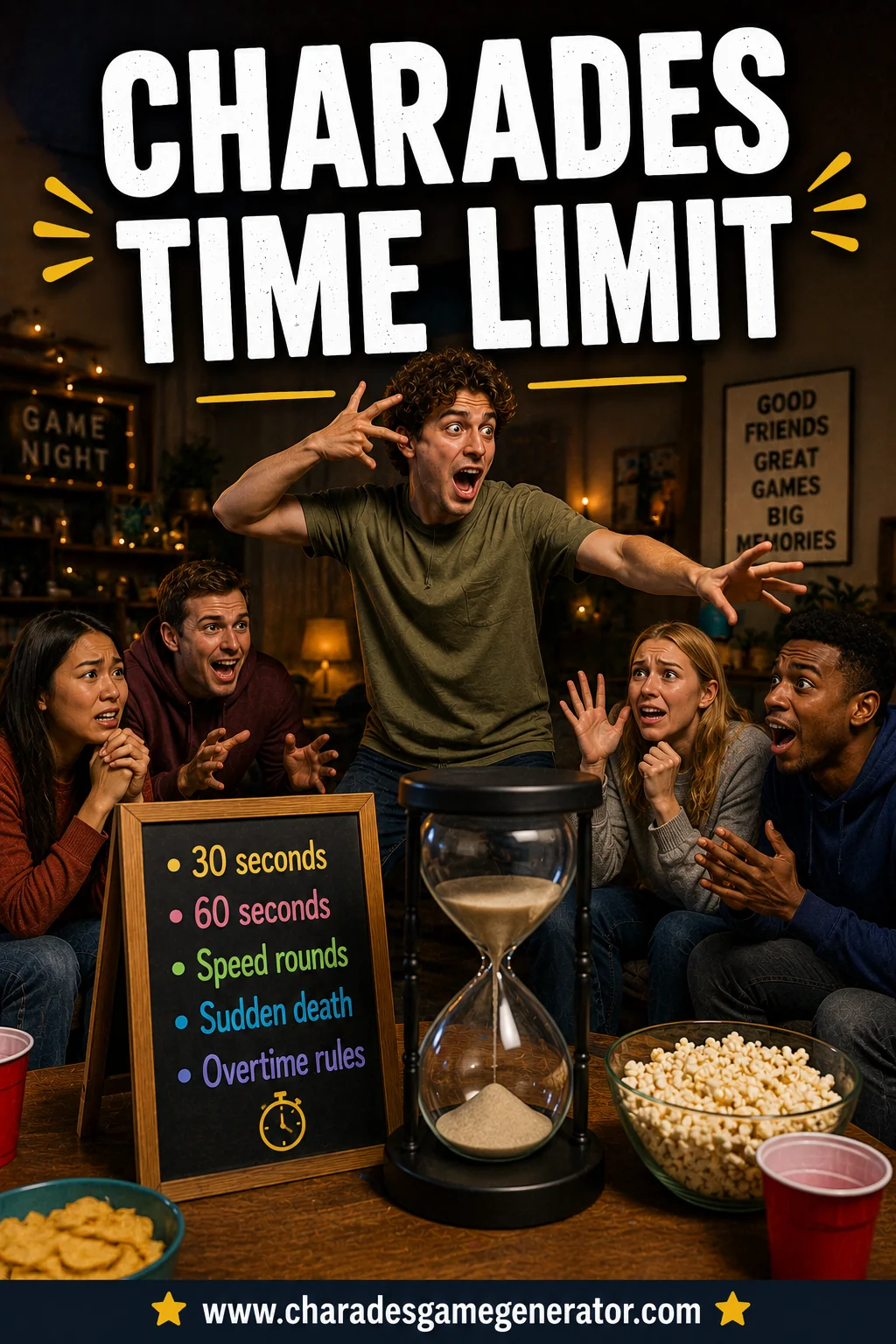
It seems like a small detail, but the time limit is one of the biggest factors in how fun your charades game feels. Too short and players panic and give up; too long and the energy drains and watchers get bored. Getting the timer right keeps every round tense, exciting, and laughter-filled.
This guide breaks down the ideal charades time limit for every situation — by group, age, and difficulty — plus timing rules, common mistakes, and tips for keeping the clock fair. Ready, set, go!
The Standard Charades Time Limit
The classic default is 60 seconds. It's the sweet spot for most groups — long enough to act out a word without panic, short enough to keep the pressure (and the laughs) high. If you're unsure, start at 60 and adjust from there.
Charades Time Limits by Situation
| Time Limit | Best For |
|---|---|
| 30 seconds | Speed rounds, easy words, big competitive groups |
| 60 seconds | The classic standard — works for almost everyone |
| 90 seconds | Harder words, mixed ages, beginners, younger kids |
| 2 minutes | Very difficult phrases, abstract words, small groups |
How to Choose the Right Time Limit
By Age
- Preschoolers (3–5): No timer, or a very generous 2 minutes. Pressure isn't fun for little ones.
- Kids (6–12): 90 seconds gives them room to think without frustration.
- Teens & adults: 60 seconds is ideal for energy and challenge.
By Difficulty
- Easy words: 30–60 seconds — they'll be guessed fast anyway.
- Medium words: 60 seconds — the reliable standard.
- Hard/abstract words: 90–120 seconds — give players a fighting chance.
By Group Size
- Small groups (2–4): 60–90 seconds, since fewer people are guessing.
- Big groups (10+): 30–45 seconds keeps fast rotation so nobody waits long.
By Vibe
- Competitive crowd: Shorter timers (30–45s) raise the stakes.
- Casual/family: Longer timers (90s) keep it relaxed and inclusive.
Charades Timer Rules
A few rules keep the clock fair and fun:
- Start the timer when the actor begins, not when they draw the word.
- Allow a few seconds to read the word before the clock starts.
- Time's up means stop — no sneaking in one last gesture.
- Agree on the limit before you start to avoid mid-game arguments.
- Use a visible timer so everyone can see the countdown (no disputes).
Pro tip: A visible, shared timer — like our generator's on-screen countdown — eliminates the classic "that wasn't 60 seconds!" argument. Everyone sees the same clock.
Common Timing Mistakes to Avoid
- No agreed limit. Decide before the game, not in the heat of a round.
- Same time for every word. Bump it up for hard words, down for easy ones.
- Too long for big groups. Long timers create downtime and boredom.
- Too short for kids. Little ones need more time, or they'll get discouraged.
- An invisible timer. If only one person can see the clock, disputes follow.
Should You Use a Timer at All?
For casual family fun, especially with young kids, you can skip the timer entirely — just act and guess at a relaxed pace. But for competitive or party play, the timer is essential: it creates the pressure that makes charades exciting and the panic-acting that makes it hilarious.
Tips for the Best Charades Timing
- Default to 60 seconds, then adjust by age and difficulty.
- Give harder words more time (90–120s) for a fair chance.
- Use shorter timers for big groups to keep rotation fast.
- Skip the timer for preschoolers — pressure isn't fun at that age.
- Use a visible, shared timer to end clock disputes for good.
Frequently Asked Questions
How long should a charades round be?
60 seconds is the classic standard. Use 30 seconds for speed rounds or easy words, and 90–120 seconds for harder words or younger players.
What's the standard charades time limit?
60 seconds per turn is the widely used default — long enough to act without panic, short enough to keep the pressure and energy high.
Should charades have a time limit?
For competitive or party play, yes — the timer creates the excitement. For casual family fun with young kids, you can skip it and play at a relaxed pace.
How much time should kids get in charades?
90 seconds works well for ages 6–12. For preschoolers (3–5), skip the timer entirely so there's no pressure or frustration.
When should you start the charades timer?
Start it when the actor begins acting, after giving them a few seconds to read the word — and stop strictly when time's up.
What time limit is best for big groups?
30–45 seconds keeps rotation fast so nobody waits long, which is key to keeping a large group engaged and the energy high.
🔗 More Charades Guides You'll Love
Ready to Nail Your Timing?
Now you know the perfect time limit for any group, age, and difficulty — and the rules to keep it fair. Put it into practice with a built-in timer:
👉 Open the free Charades Generator — adjustable 30/60/90/120-second timer plus automatic scoring. No app, no signup. ⏱️
What's your group's ideal time limit? Start at 60 seconds and adjust until every round feels electric!