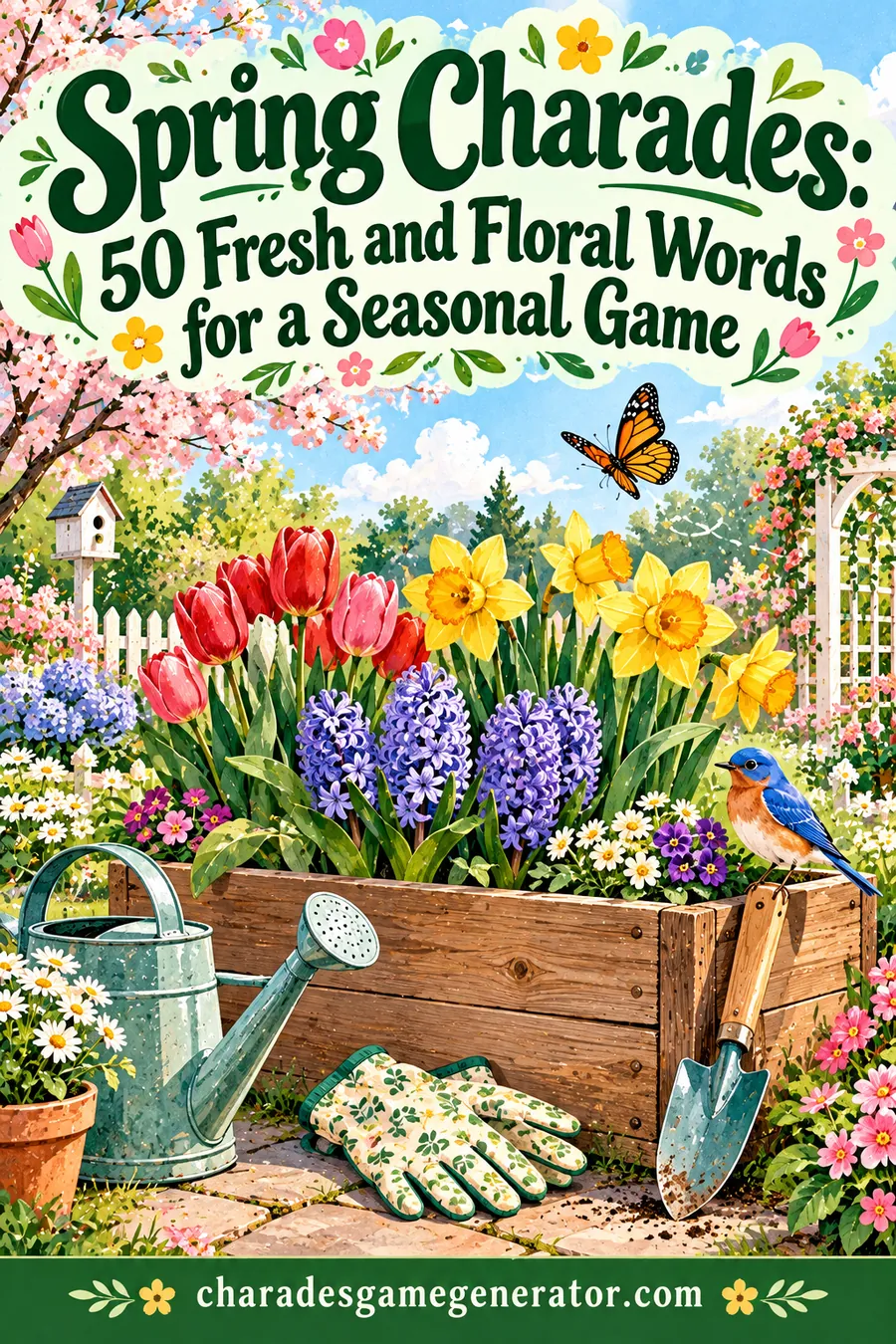
Spring Charades: 50 Fresh and Floral Words for a Seasonal Game
Spring charades is the silent acting game played with words about the season, such as rain boots, baby birds, kite flying, planting seeds and blooming flowers. Here are 60 spring words sorted from easy to hard, followed by tips for classrooms and family game night, acting ideas and ways to match the game to early, middle or late spring.
In the Northern Hemisphere, many people think of spring as March through May, when the weather warms, days grow longer and gardens wake up. That makes it a lovely season for a themed game. The words below cover weather, gardening, baby animals and outdoor play, so you can use them at home, in a classroom or at a spring party without leaning on any one holiday.
The 50 Spring Charades Words
The list is sorted into three levels. Easy words are single actions that young children can act out. Medium words add a little challenge. Hard words are longer phrases or ideas that suit older kids and adults.
Easy
- Flying a kite
- Rain boots
- Umbrella
- Jumping in puddles
- Smelling a flower
- Butterfly
- Bunny hopping
- Baby chick
- Planting seeds
- Watering can
- Rainbow
- Bird building a nest
- Bee buzzing
- Riding a bike
- Picking flowers
- Ladybug
- Frog jumping
- Blowing bubbles
- Swinging on a swing
- Duck waddling
Medium
- Spring cleaning
- Opening the windows
- Mowing the lawn for the first time
- Raking the garden bed
- Baby bird hatching from an egg
- Caterpillar turning into a butterfly
- Sneezing from pollen
- Washing muddy boots
- Planting a tree
- Having a picnic
- Robin pulling a worm
- Flower blooming
- Thunderstorm
- Lamb leaping
- Playing hopscotch
- Jumping rope
- Putting away winter coats
- Pulling weeds
- Rolling down a grassy hill
- Spotting the first robin
Hard
- Daylight saving time
- Spring break
- Snow melting
- April showers
- Seedling sprouting
- Pollen count
- Hanging laundry on a clothesline
- Farmers market
- Bird migration
- Bees pollinating flowers
Need more words or a quick random pick? The free charades generator deals words instantly, which is handy if you want to blend spring words with other categories.
What Makes Spring Charades Different
Spring sits between two seasons, and the words reflect that. Early spring is about melting snow, mud and rain boots. Mid-spring brings blooming flowers, baby animals and gardening. Late spring feels almost like summer, with picnics, bike rides and baseball. A spring list lets you capture all of that change in one game.
This list also stays separate from any single holiday. If you want an Easter round with egg hunts and baskets, our Easter charades list covers that. For a green-and-gold round in March, try the St. Patrick's Day charades page. The spring words here work any day from March to May.
It is also different from a general nature list. The weather and nature charades page covers the whole year, from hurricanes to falling leaves. This page focuses only on spring.
How to Play Spring Charades
The basic rules are the same as any charades game, with a few spring-friendly touches.
Form two teams. For classrooms, split the room in half. For families, mix ages on each team.
Draw a word. The actor pulls a slip from a bowl or flower pot and has a few seconds to plan.
Act it out silently. No talking, mouthing or sound effects. Buzzing like a bee is tempting, but it is against the rules.
Set a timer. Sixty seconds per turn suits most groups. Give young children more time.
Score one point per correct guess. Play to a target score or for a set number of rounds.
Charades signals to teach first
- Number of fingers for the number of words.
- Fingers on your forearm to show which word you are acting.
- Tug on your ear for "sounds like."
- Small pinch for a short word.
- Make a "T" with your hands for a time-out.
Sorting Words by Early, Middle and Late Spring
If you play several rounds across the season, you can match the words to the month. This table offers a starting point.
| Part of spring | Good words | Mood |
|---|---|---|
| Early (around March) | Snow melting, Crocus pushing through snow, Rain boots, Jumping in puddles, Daylight saving time | Wet, muddy and fresh |
| Middle (around April) | April showers, Umbrella, Flower blooming, Baby chick, Planting seeds | Rainy and blooming |
| Late (around May) | Having a picnic, Riding a bike, Baseball opening day, Farmers market, Planting a vegetable garden | Warm and outdoorsy |
Playing seasonal rounds this way can become a fun family tradition. Pull out the early-spring words on the first warm day and the late-spring words when school is nearly out.
Spring Charades in the Classroom
Teachers can use spring charades as a warm-up, a brain break or a vocabulary review. A few tips help it run smoothly.
Tie it to a science lesson. Words like "caterpillar turning into a butterfly," "tadpole turning into a frog" and "seedling sprouting" reinforce life cycle lessons.
Use small groups. Teams of four or five keep everyone involved and reduce waiting.
Let students write clues. Ask each student to write one spring word on a slip. Add their words to the list for a final round.
Keep turns short. Thirty to sixty seconds keeps the energy high.
Act as the judge. The teacher can decide close calls and keep score on the board.
For more simple words that suit young learners, see our charades words for kids list.
Acting Tips for Tricky Spring Words
Daylight saving time: Point at your wrist, turn an imaginary clock hand forward, then yawn and rub your eyes.
Spring cleaning: Throw open a window, take a deep breath, then start dusting and sweeping with energy.
Pollen count: Sniff a flower, sneeze, then count on your fingers.
Bird migration: Flap your arms and fly in a V shape with teammates, or point north and keep flying.
Wind blowing an umbrella inside out: Open an umbrella, lean into the wind, then act shocked as it flips.
Snow melting: Start standing tall and stiff, then slowly droop and sink to the ground.
Spring Game Night at Home
Family game night in spring can move outdoors. Here are a few ways to make it feel seasonal.
Play in the backyard. Words like "flying a kite," "rolling down a grassy hill" and "playing hopscotch" are easier with space.
Use a flower pot for the slips. A small clean pot or a watering can makes a fun word holder.
Snack break with spring treats. Fresh fruit, lemonade or a picnic blanket on the grass adds to the mood.
Make a spring bingo combo. After charades, keep the list handy and challenge kids to spot real-life versions of the words during the week, such as a robin or a rainbow.
Spring Charades Variations
Once your group knows the basic game, these variations keep the season's rounds interesting.
Life cycle charades. Pick a word that shows change, such as "caterpillar turning into a butterfly," "tadpole turning into a frog" or "baby bird hatching from an egg." The actor must show every stage from beginning to end. Teams earn a bonus point if they can name the stages in order after guessing.
Weather report round. One player acts as a silent weather reporter. They point to an imaginary map and act out a spring forecast, such as "thunderstorm," "April showers" or "gentle spring breeze." The team guesses the weather.
Garden relay. Line teams up. Each player acts one gardening step in order: "pulling weeds," "raking the garden bed," "planting seeds," "watering can" and "flower blooming." The team must guess each step before the next player can start.
Animal parade. Use only the baby animal and critter words. Everyone on the acting team performs the same animal at once, so it looks like a little parade of chicks, lambs or ducks crossing the room.
Freeze and bloom. The actor starts curled up small like a seed and slowly grows into the word. The team gets one guess each time the actor pauses. It is a sweet way to act out spring words and it slows the game down for younger players.
Making Your Own Spring Words
The 50 words above are a starting point. Adding your own keeps the game personal and fresh every year.
Look out the window. Ask each player to name one sign of spring they noticed this week, like a new bird, a muddy path or the first flowers in the yard. Write those on slips.
Think about local spring. Spring looks different around the country. Families in warm areas might add "first beach day," while families in colder places might add "last snowfall" or "putting away the snow shovel."
Include favorite activities. If your family always flies kites or visits a farm in spring, add those to the list.
Keep a seasonal jar. Store all your spring slips in a jar and add a few new ones each year. Over time, the jar becomes a fun family record of what spring meant to you.
Spring Party Ideas
Spring brings lots of reasons to gather: birthday parties, garden parties, end-of-school-year celebrations and first picnics of the year. Charades fits all of them.
Garden party. Set up a "stage" between flower beds and keep the word slips in a watering can. Guests take turns acting garden words, and the winning team gets to pick the first seat at the picnic table.
Rainy day indoors. Spring weather can change fast. If the picnic gets rained out, move the game inside and play a round of only rainy-day words, such as "jumping in puddles," "umbrella," "April showers" and "thunderstorm." It turns a disappointing day into a fun one.
Spring birthday. For a child born in March, April or May, mix the spring list with general party words. Let the birthday child pick the first word and be the judge of close calls.
Neighborhood block party. Big groups can split into several teams named after flowers, such as Team Tulip, Team Daisy and Team Sunflower. Rotate actors and keep turns short so the whole street gets a chance to play.
After-school wind-down. On a warm afternoon, a ten-minute round on the porch is a great way to let kids burn off energy before homework.
If you are looking for more ways to fill a family evening, our family game night ideas page has plenty of options to pair with a spring round.
Mistakes to Avoid
Using only easy words with older players. Teens and adults get bored fast. Mix in the hard words so everyone feels challenged.
Adding holiday words without warning. If your group includes people who celebrate different holidays, keep the game focused on the season itself.
Playing too long. Spring evenings are short on patience when the weather is nice. Twenty to thirty minutes is plenty.
Forgetting the "no sounds" rule. Spring words like "bee buzzing" and "duck waddling" invite noises. Remind players at the start.
Crowding the stage. If you play indoors, clear a space so actors can hop, swing and flap safely.
FAQ
What are some easy spring charades words for kids?
Good choices include "flying a kite," "jumping in puddles," "smelling a flower," "butterfly," "bunny hopping" and "planting seeds." Each is a single clear action that young children can perform.
Is spring charades the same as Easter charades?
No. Spring charades focuses on the season itself, including weather, gardening and baby animals. Easter charades covers holiday traditions such as egg hunts and baskets. You can play both, but they use different word lists.
When should I play spring charades?
Any time from March through May works well. Some families save early-spring words for March, rainy words for April and outdoor words for May.
How many players do you need?
Three people are enough for a casual game. For teams, aim for four or more. Classrooms can split into several small teams.
Can spring charades be played outside?
Yes, and many of the words are easier outdoors. Choose a flat grassy spot and keep the slips in a heavy container so the wind does not blow them away.
How can teachers use spring charades?
Use it as a quick brain break, a review of life cycle vocabulary or a reward at the end of a lesson. Small teams and short turns keep the whole class involved.
👉 Open the free Charades Generator — instant spring words, a timer and team scoring. No app, no signup. 🌷